City publishes economic profiles for 70+ industrial and commercial precincts in Cape Town
02 October 2025
The City of Cape Town has developed comprehensive profiles for more than 70 Economic Areas in Cape Town. This is a first for any municipality in South Africa, and provides a comprehensive decade-long overview (2012 to 2022) of land use, employment, property trends and development activity in industrial and commercial areas across the metro. Each profile combines a number of data sources unique to that area and are combined in a 10-page overview on the City’s website.
‘The profiles have been developed by our Metropolitan Spatial Planning branch in collaboration with the Economic Growth Directorate. It provides a wealth of information to planners, developers, investors, and policymakers across all spheres of government, and importantly, supports the City’s evidence-based decision-making and spatial planning. Some of the useful information includes indicators such as vacancy rates, capitalisation rates, firm counts, and land use agglomeration patterns. These indicators are important tools for assessing the precincts’ performance and potential, and provide insights into market dynamics and spatial trends. This is not only helpful for the City’s planning processes, but can also stimulate and inform investment from the private sector. As a result, the department is collaborating with Invest Cape Town to promote the profiles to investors and business partners such as Wesgro, GreenCape, and the Greater Tygerberg Partnership,’ said the City’s Deputy Mayor and Mayoral Committee Member for Spatial Planning and Environment, Alderman Eddie Andrews.
The profiles are available on the City’s Planning Portal at https://bit.ly/4myQ5ic and the Invest Cape Town website.
The Economic Area Profiles updates the Economic Areas Management Programme that tracked and routinely assessed the market performance and long-term growth potential of business precincts across Cape Town.
More about the profiles:
The profile overview is based on decade-long performance data
Each profile consists of the policy and regulations applicable to the area; an introduction; land use activities; employment trends based on SARS data; development pipeline; urban land markets; land use; market performance; and overall performance and potential
These indicators demonstrate the competitiveness, technological innovation and urban efficiency of the particular economic area
Profiles provide insight into possible opportunities and risks
The profiles are used to inform various other City programmes and policies
Profiles are used in monitoring and evaluating strategies and policies reflected in the Metropolitan Spatial Development Framework and eight District Spatial Development Frameworks
The profiles were compiled using City-owned data sources such as the General Valuation roll, the Development Application and Management System for building plan and land use applications, and SARS information on employment and industry patterns.
Currently, there are 78 Economic Areas across the metro.
The profiles will be updated periodically to include new economic areas or to reflect on the expansion of existing ones. These profiles are a first of its kind in providing a 10-year overview on the growth of each economic area.
‘The Metro and District Spatial Planning teams are experts at consolidating large and spatial-temporal data sources through innovative tools and procedures. The Economic Area profiles are thus a summary of various big data processes so that users can have access to useful statistics and trend data.
‘I invite professionals in urban planning, investors, and also residents to visit the Economic Area Profiles landing page on the City’s website. This is an extraordinary product that can tell you a lot about development trends between 2012 to 2022,’ said Alderman Andrews.
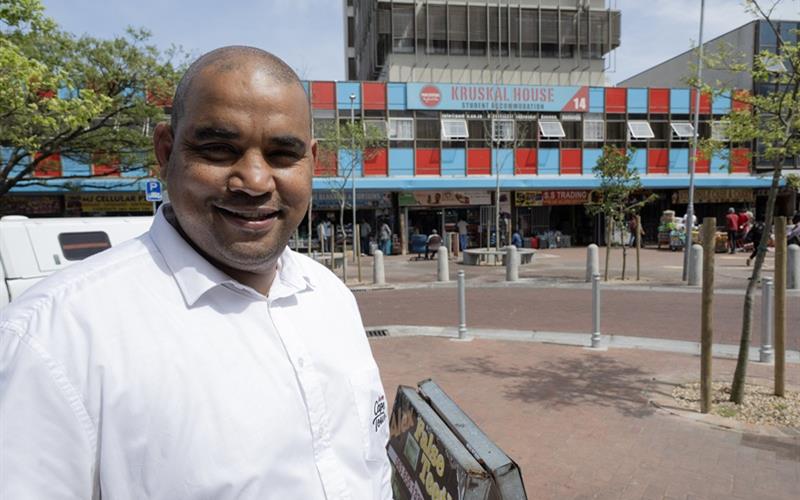
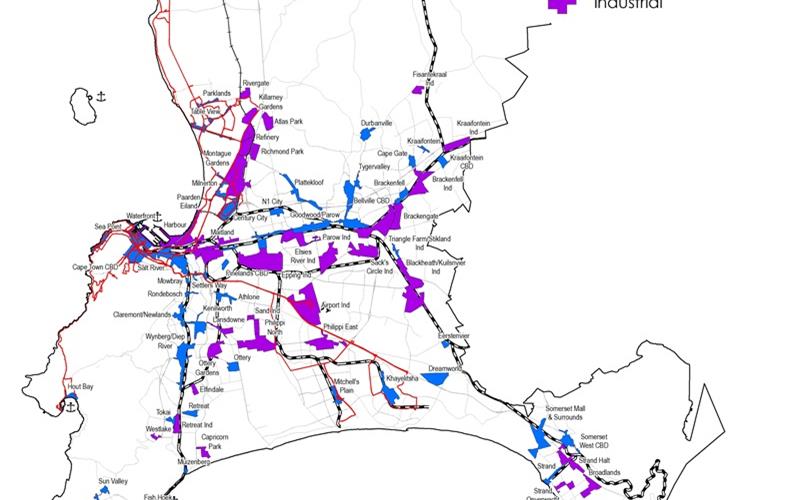
Caption: The map indicates the Economic Areas in the Cape Town metro; Ald. Andrews visited the Economic Area in the Bellville CBD earlier this week.
End
Published by:
City of Cape Town, Media Office